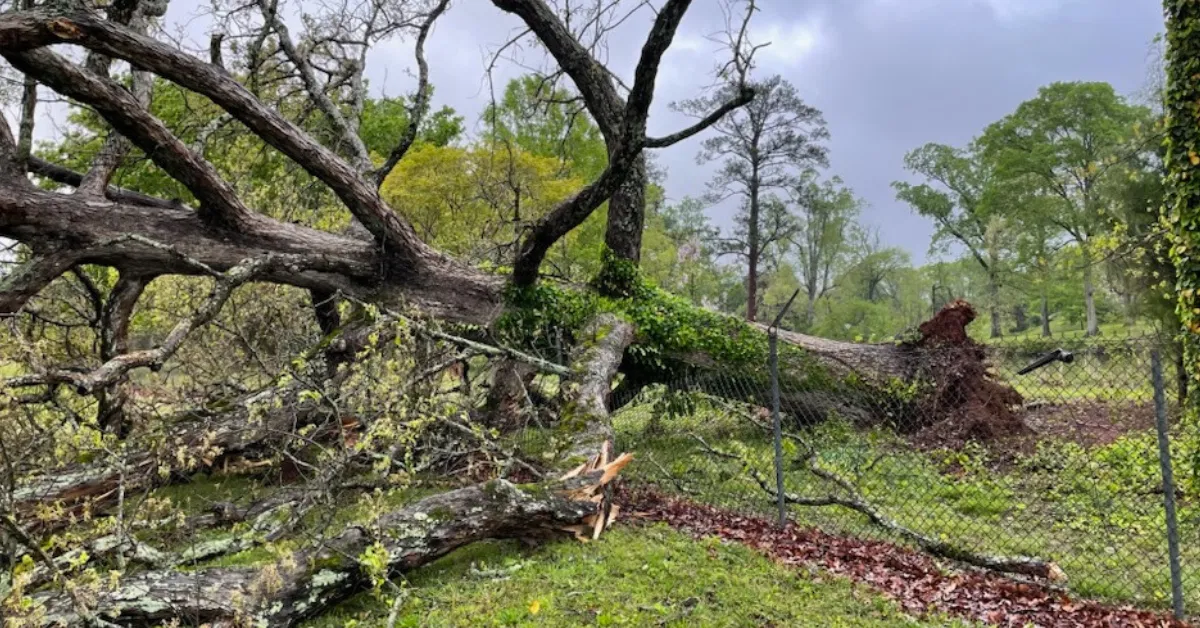
Hazardous trees in Gwinnett County rarely fail without warning. Signs like sudden leaning, fungal growth, or canopy thinning often appear months before failure. Gwinnett’s clay-heavy soils, humid climate, and frequent high wind storms create conditions where tree structural problems can develop quickly. Recognizing early warning signs helps prevent property damage, injuries, and emergency removals.
Key Takeaways
- Early detection of hazardous tree signs, like severe leaning or fungal growth, is crucial for safety and property protection in Gwinnett County.
- Gwinnett’s humid climate, clay soil, and frequent high-wind storms significantly increase the risk of tree failure, making regular inspections vital.
- Local regulations, including permit requirements for specific areas and ‘Specimen Tree’ rules, must be understood before any tree removal.
- Proactive tree care, including professional assessments, is significantly more cost-effective than emergency removal and damage repair.
- Hiring ISA-certified arborists helps avoid common Gwinnett homeowner pain points, such as ‘ghosting’ contractors and improper tree care.
- Specific pests like Southern Pine Beetles can rapidly turn a healthy tree into a brittle hazard, requiring immediate attention.
What Defines a Hazardous Tree?
A hazardous tree is any tree with structural defects that make it prone to failure, posing a risk to people or property. In Gwinnett County, these risks are often amplified by our specific environmental conditions.
- Structural Defects: Weak branch attachments, cracks, or a compromised trunk.
- Disease or Decay: Extensive rot, cankers, or fungal growth indicating internal weakness.
- Pest Infestation: Insects that bore into the tree, compromising its integrity.
- Environmental Stress: Damage from storms, drought, or poor planting conditions.
- Target Presence: A tree is only hazardous if its potential failure could impact a ‘target’ like a house, car, or person.
Common Signs of a Hazardous Tree in Gwinnett County Yards
Identifying red flags early saves significant headache and expense. Here are the key indicators Gwinnett County arborists look for. If you notice more than one of these signs, a professional inspection is strongly recommended.
Severe Leaning or Soil Heaving
A tree that suddenly starts leaning significantly often indicates root failure. In Gwinnett’s clay-heavy soils, root systems can become compromised after prolonged rain.
- Lean greater than 45 degrees: A critical indicator of imminent failure.
- Soil heaving: Look for mounding at the base, suggesting roots are losing their grip.
- Exposed roots: Visible uplift can signal severe instability.
V-Shaped Unions and Included Bark
V-shaped branch unions, especially with included bark growing inward, are inherently weaker than U-shaped unions. Georgia’s high winds frequently exploit these flaws.
- Weak attachment: Prone to splitting during high winds or ice storms.
- Internal decay risk: Included bark prevents proper wood formation.
- Common species: Often seen in Bradford Pears and Maples.
Fungal Growth (Mushrooms or Conks)
Mushrooms or fungal growths are clear indicators of internal decay. Gwinnett’s humidity and clay soil create ideal environments for root rot.
- Root rot: Fungi at the base often signal severe root decay.
- Trunk decay: Conks higher up mean the internal wood is rotting.
- Increased risk: Decayed wood lacks the strength to withstand high winds.
Pest Infestations and Diseases
Small holes or sawdust-like frass can point to a serious infestation. The Southern Pine Beetle can kill a mature tree in weeks, turning it into a brittle, falling hazard.
- Bore holes: Circular holes often with oozing sap.
- Frass: Fine sawdust expelled by boring insects.
- Crown dieback: A quick decline in the canopy often follows pest attacks.
Cankers and Areas of Decay
Cankers are sunken, discolored patches indicating localized decay. These weak spots often lead to failure and are common in local Leyland Cypress and Oak trees.
- Sunken bark: Areas where bark is receding or sunken.
- Open wounds: Areas where bark has fallen off, exposing rot.
- Branch dieback: Cankers can girdle and kill large branches.
Dead Branches or Crown Dieback
Large dead branches are immediate hazards. Extensive dieback in the crown suggests significant stress or root problems compromising the entire tree.
- No leaves: Branches that fail to leaf out in spring.
- Brittle wood: Dead branches snap easily during storms.
- Thinning canopy: Indicates overall poor health and structural risk.
Gwinnett County’s Unique Tree Hazard Factors
Gwinnett County’s environment presents specific challenges that homeowners must consider when assessing tree health.
Climate Risks: Storms and Humidity
Our region is prone to severe weather. High-wind thunderstorms and occasional ice storms can cause massive tree failures and power outages.
- High winds: The primary cause of failure in weak trees.
- Ice storms: Weight accumulation leads to branch breakage.
- Humidity: Promotes rapid fungal and disease growth.
Soil Conditions: Clay and Drainage
Prevalent clay soil can create drainage issues and waterlogging that stresses roots, leading to rot diseases in species not adapted to heavy soil.
- Poor aeration: Clay compacts easily, restricting oxygen to roots.
- Waterlogging: Increases susceptibility to fungal infections.
- Reduced stability: Compromised roots make trees less stable.
Local Regulations and Specimen Trees
Navigating tree removal involves understanding specific local regulations. Local rules can change; always confirm with your city or Gwinnett County Planning before removal.
- Permit requirements: Usually not needed for residential removal in unincorporated Gwinnett unless in protected buffers.
- Specimen Trees: Specific large or rare trees require consultation before removal.
- City-specific ordinances: Cities like Snellville and Lawrenceville have independent rules.
The Costs of Ignoring Hazardous Trees
Ignoring signs of hazard leads to greater expense. Proactive care is significantly more cost-effective than emergency response.
Property Damage and Liability Risks
A fallen tree can damage homes, vehicles, and utility lines. Homeowners may face liability if a neglected hazard damages a neighbor’s property.
- Structural damage: Roof and foundation damage from impact.
- Vehicle damage: Crushed cars or equipment.
- Liability: Legal and financial responsibility for neighbor damage.
Power Outages and Infrastructure Risk
Downed trees are the leading cause of power outages in Metro Atlanta. A hazardous tree in your yard can impact your entire community.
- Disrupted utilities: Severed power, internet, and phone lines.
- Community impact: Outages affecting dozens of households.
- Emergency strain: Increased workload for local utility crews.
When to Call a Professional Arborist in Gwinnett
When you notice signs of hazard, consult a professional. Many homeowners experience issues with uncertified operators, leading to property damage or ‘ghosting’.
The Importance of ISA Certification
An ISA-certified arborist has demonstrated knowledge in tree care. Their expertise ensures proper diagnosis and safe removal, protecting your property value.
- Expert assessment: Accurate diagnosis of health issues.
- Safe practices: Proven methods for pruning and removal.
- Insurance: Proper coverage for unforeseen incidents.
Avoiding Unreliable Operators
To avoid unreliable contractors, vet your tree service thoroughly. Beware of companies that only accept cash or pressure you into immediate decisions.
- Check references: Review local Gwinnett County testimonials.
- Verify insurance: Request proof of liability and workers’ compensation.
- Multiple quotes: Compare services from three reputable companies.
What to Ask a Tree Service
Ask specific questions to ensure you’re hiring a qualified professional for hazardous tree assessment in Gwinnett.
- “Are you ISA-certified?”
- “Do you have current liability insurance?”
- “Can you provide Gwinnett County references?”
- “What is your estimated timeline and cleanup process?”
Preventative Measures for Tree Health
Preventative measures are your best defense against tree hazards. Regular care keeps trees healthy and reduces the likelihood of failure.
Regular Tree Inspections
Even healthy-looking trees benefit from regular professional check-ups by ISA-certified arborists. These experts spot subtle issues like root rot or structural weakness before they escalate.
- Annual check-ups: Critical for mature trees near structures.
- Post-storm assessment: Checking for hidden damage after high winds.
- Early detection: Catching pests before they become critical hazards.
Proper Pruning and Maintenance
Proper pruning improves structure and removes weak branches. Avoid ‘topping’ trees, which stresses them and creates dangerous weak points.
- Structural pruning: Encourages strong branch development.
- Deadwood removal: Eliminates immediate falling hazards.
- Avoid topping: Prevents the growth of weak, breakable sprouts.
Watering and Fertilization
Ensuring adequate water and nutrients helps trees resist disease. Deep watering is especially important during Georgia dry spells.
- Deep watering: Promotes strong, deep root systems.
- Soil amendments: Improving clay soil with organic matter.
- Targeted fertilization: Providing nutrients to struggling trees.
Frequently Asked Questions
What makes a tree hazardous in Gwinnett County?
A tree in Gwinnett County is considered hazardous if it shows signs of structural weakness, disease, or pest infestation that could lead to failure. This includes severe leaning, large dead branches, extensive decay, or soil heaving around the base, especially after heavy rains or high winds.
Do I need a permit to remove a hazardous tree in Gwinnett County?
In unincorporated Gwinnett, you generally don’t need a permit for removing trees on occupied residential property unless it’s in a specific buffer zone (Zoning, Stream, Chattahoochee River) or a Tree Save Area. However, at least two trees must remain on the lot. Always check city-specific rules.
Are there special rules for ‘Specimen Trees’ in Gwinnett?
Yes, Gwinnett County defines ‘Specimen Trees’ based on size, rarity, or age. Removing these requires consultation with the Department of Planning and Development. Always verify a tree’s status before planning removal to avoid penalties.
How does Gwinnett’s climate affect tree hazards?
The humid subtropical climate in Gwinnett County encourages rapid fungal growth, leading to root rot. High-wind thunderstorms and occasional ice storms are major triggers for structurally weak trees to fail. These climate factors make regular tree assessments crucial.
How do I choose a reliable arborist in Gwinnett County?
Look for ISA (International Society of Arboriculture) certification. This ensures the arborist has the knowledge and experience to properly assess tree health and safely perform removals. Always ask for proof of insurance and references to avoid issues like ‘ghosting’ or property damage.
Warning Signs Your Tree Is Becoming Hazardous in Gwinnett County
Recognizing the signs a tree is becoming hazardous in Gwinnett County yards protects your property and ensures safety. Proactive assessment and timely intervention by certified arborists prevent costly damage and maintain the health of your landscape. If you suspect a tree poses a risk, don’t wait for a storm to confirm your fears. Take action and contact a local expert for a thorough evaluation.